Norwegian Cuisine cannot be the Worst in the World, right?

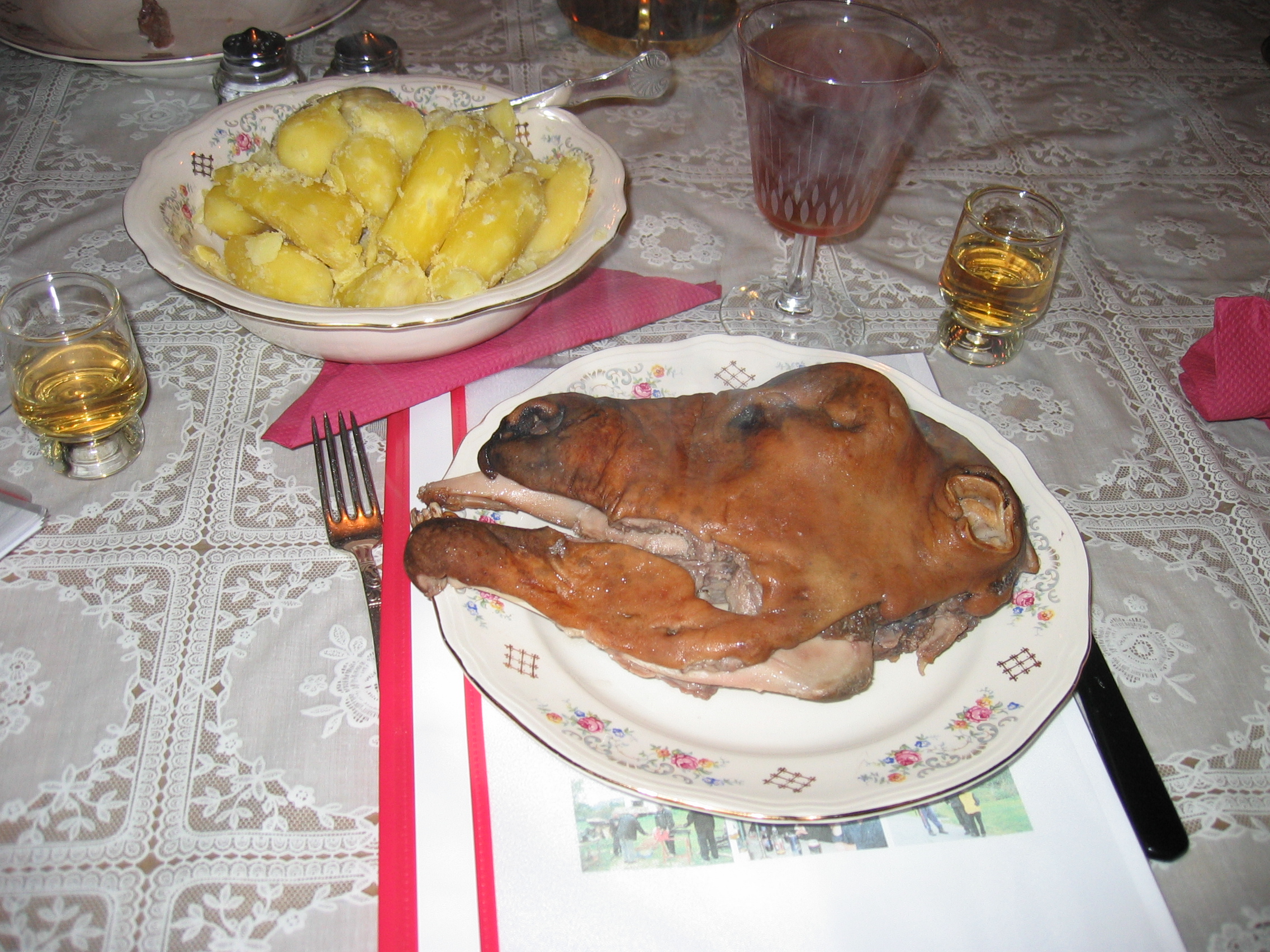
Image found on Wikipedia – smalahove

TasteAtlas Awards 2022 ranked 95 countries from best to worst cuisine. Surprise surprise, Norway makes last spot, therefore becoming the worst cuisine in the world according to TasteAtlas. Is it really that bad?

Who did Norway lose against?

Let’s look at something else first. Which cuisines did Norway lose against? Where is for example ranked Danish cuisine in this survey, which is I think really bad. I used to live there and I can tell you the New nordic Cuisine from the glossy magazines is no where to be seen in Danish peoples’ fridges and kitchens. Danish food is quite similar to what we eat in Norway: cheap sausages, open sandwiches, pickled herring and so on. Sure, they have better bread than Norway and more choice in supermarkets, but still, do they really deserve to be ranked 35th best cuisine in the world out of 95? SERIOUSLY?

Norwegian cuisine is also ranked worse than Australian cuisine, which has as their best food “Tim Tams”, a processed biscuit coated in chocolate.

Worst than that, who is next worse cuisine in the world just before Norwegian cuisine? Moroccan food, which is, I believe, offering absolutely amazing food and flavours. I am just completely in shock, and I am therefore wondering how seriously we should take this survey to begin with.

Norwegian food is bad but not the worse

I have written many articles about Norwegian cuisine and Norwegian food culture. My most read is where I write about Norwegian food culture for kids, in my blogpost and article in Norwegian newspaper VG Bread, candy and shrimp cheese in a tube. Why do kids in Norway get such bad food?

I have travelled to many places in Norway and ate a lot of different local food, and I can say with quite some assurance that Norway has amazing produce. The best potatoes I’ve tasted in my life, on Skåtøy, an island in Telemark. Best fish I’ve eaten, Skrei in the Lofoten islands. Great cheese and dairy, from Røros among others, amazing leg sausage from Valdres. I eat Norwegian carrots as if it was candy, it is so sweet and delicious. Norwegian cabbage is very good and very tasty, you can make anything from salads to fårikål with it (lamb and cabbage cooked in pepper for a long time). Basically I like food and I think Norway has good food.

The problem is that Norwegians don’t eat Norwegian food. They eat a lot of processed food which takes no time to cook. There is almost like an inferiority complex among Norwegians regarding their food, which they can feel isn’t as good as other cuisines like Italian or even Japanese. I personally think there could be a revival of Norwegian original cuisine, with all the “husmanskost” as they call it here, where local ingredients and recipes can be used in normal kitchens. Not everyone has to like lutefisk (cod in lye) or rakfisk (highly fermented trout), but still, dishes like fårikål are quite mild.

Truth be told Norwegians themselves don’t eat lutefisk or rakfisk everyday. They’ll eat it once a year at best.

So to conclude, I do not agree with this ranking. Norwegian food is not the best in the world, but there are amazing produce and my goodness it has to be better than Australian cuisine. No offence 🙂

However TasteAtlas might have done something right when ranking the worst Norwegian food to be found. I agree with the whole list besides fårikål being there 🙂


Portrait of Lorelou Desjardins smiling, wearing a patterned sweater, with a blurred natural background.

Lorelou Desjardins is a French-born writer, journalist and speaker. She is the author of several best-selling books about Norway, and is a columnist in Norway’s largest newspaper VG. She writes on topics ranging from culture to language and environmental issues. She has been observing Norwegians and writing with humor about them in her internationally famous blog A Frog in the Fjord. Lorelou also gives lectures across the country, helping foreigners better understand Norwegian working culture and make meaningful local connections.

Comments

16 responses to “Norwegian Cuisine cannot be the Worst in the World, right?”

  1. Karina Kapka Avatar
    Karina Kapka

    Traditional Norwegian food, meaning what they call “gammeldagsmat”, or olden days food, is some of the best home-cooked food in the world. It includes roast beef with potatoes, very similar to American or British dishes, and other meat and fish dishes Americans and British might remember their grandmothers serving. This cuisine was the norm in the rural areas on the farms when I spent summers working as volunteer farm help decades ago. I felt right at home at meal time. I wonder if our blogger ever experienced any farm stays.

    So the question is: what do we mean when we speak about “Norwegian food”? I never saw any lutefisk, food in a tube, or even sausage that I recall. Only fresh fish right out of the fjord, fried or poached with a light sauce, a variety of meat dishes including meatballs. Everything was delicious. Probably if I’d been living in a city, I’d have had a very different culinary experience.

  2. Norwegian traditional food is fantastic when served at home

    You dip down to #95 because of your careless attitude towards restaurants along your highways. Norwegian “Kro” means frozen minced meat served with powder sauces from Toro at outrages prices and with no spices. 50 USD for this crap. Norwegian Kros never hired real chefs – anyone who can operate a microwave oven is hired. So we’ll deserved jumbo ranking

  3. Francis Avatar

    I know Norway for many decades and I also worked there. While Norwegian food might not be one of the best, its also not bad and far from the worse. Its mostly fresh, and natural. Much of it can be called rustic.
    You dont like fish and seafood? OK, you are in trouble.
    The negative parts are: Soup is served mostly almost cold. No idea why. And Norwegians dont like gravies and spices.
    I traveled with Norwegians to other countries, including my – EX – gf. If there is gravy, they scrape it off and leave it on the plate. And avoid spices as much as possible, but rarely complain.

  4. The food at Norwegian fine dining restaurants may be good ( I wouldn’t know) but the every day diet is very poor. Norway is not particularly multicultural and this is reflected in the poor quality asian food. For instance, if you want Thai food, know that the restaurant will almost certainly be called something like “Sushi and Pad Thai”. An insane mix. Further, the produce at the grocery stores is not particularly diverse nor fresh. Further, there is little to no cafe or brunch culture, with most cafes being chain owned selling only stale croissants. I am sure if you pick the top 3 restaurants in the country they are great but if you live here, the food you consume on a regular basis will be much worse than other places I have lived ( Australia ). Sure you might not like Tim Tams but since Australia is a far more multicultural society the variety and quality of restaurants is very high. Your day to day diet in Australia will be incomparably better than in Norway.

  5. Maybe it’s not the worst but it is definitely bad. Good food may exist in some places but it’s the exception. Here is why: Yes, you can buy fresh fish for example but very seldom you can buy the whole fish. Almost always the head is removed. Without the head it is impossible to tell how fresh/ old the fish is. The stuff at Menu or other places is very little educated about it , can’t tell you much and apparently it’s not an issue for the Norwegians.I asked a fisherman who was selling fish at Akker Brygge when did he catch the fish and he said two til three days ago. That is not fresh. I think Bergen is the only city who has a fish market,so I suppose it’s better there.
    Fruits and vegetables, I think it’s a catastrophy . Not much variety, not really fresh, wrapped in plastic etc. I think the reason is simply because Norwegians don’t buy much of it. It’s not that important for them. They don’t want to spend the time to cook from scratch. The biggest problem for me personally is that there are no markets , there is no market culture at all ( I mean vegetable markets who are usually once or twice a week where you can buy all kind of food very fresh) . I think the Norwegians don’t know what they are missing! ( Do I sound arrogant? Fine!) Yes there are very good restaurants but they can’t make up for all the bad once. I think it all started when the Norwegians abandoned their own food culture ( bakeries, butcheries, fish shops, markets ) in favor to the big supermarkets. That’s something I never understood. Norway claims to be proud of their traditions but they don’t take really care of them. So in a way they unlearned how to cook properly if you know what I mean. But apparently it’s just a problem for us, for foreigners, Norwegians don’t have a problem with their food. Look at what they give the children in the kindergardens. It’s fine for them. So what can one expect?

  6. Denmark has an excellent cuisine. I consider it the best in Scandinavia.

  7. Norwegian ingredients can be of excellent quality if you know where to look and what to look for. Not much grows here, but what does grow tastes better than just about anything else. The berries, the root vegetables, the apples and pears – quite clearly #1 in the world, no contest. The fish, if you can get it fresh north of West Cape (Stadt), the more northern and farther from the coastline the better, is also #1 in the world. A Norwegian fisherman would have thrown out of his boat anything the French and Italians calls “fish”, with yellow-brown flesh reeking of unclean waters.

    However, what we Norwegians make out of those raw materials I can readily admit being overly simplistic and unappealing in presentation.

    That’s because the only thing the French and Italian world-renown kitchens have to offer is excellent marketing. That’s what have made cooked wheat-dough and 20 calories of pretentious “artsy” food famous.

  8. Ok, I looked into what this was based on, and … I wouldn’t take it seriously.

    The TasteAtlas rankings seem to be based on average rating for foods sorted into each country’s category. For Norway, only the top 43 dishes have a rating at all. (Which means that the 10 worst dishes linked at the end of this blog post excludes unrated dishes.) I didn’t scroll more than 100 dishes down in the Italy category, but they were all rated, so Italy clearly has *more* ratings, which will usually improve the average (unless all your food is truly abysmal).

    And from best to worst there’s just a <1.2 star difference. Significant when choosing which TV to buy, but I wouldn't judge any country by this rating.

    I note that gammelost didn't make the list of worst foods despite being the lowest rated of all rated Norwegian foods. This might be because it fails at being edible, which should be a core requirement for food. D:

  9. Who won this competition anyway?
    I’ve lived long enough Norway to say that I don’t agree that it’s the worst food in the world here. That was a very subjective opinion of the Jury. Fish is amazing: kveite, skrei and other types of wild fish are great and tasty. I like to eat light food with good raw materials and you can definitely find them in the Norwegian grocery stores. Vegetables are not as good as further south in Europe because of the long winters, but local produce is fresh, organic and excellent during the months with a lot of sun.
    Love Norwegian knekkebrød, cheeses, hams, and lefser, lapper, vafler…
    Norway abd Norwegians are connected to their nature. The people are sporty, active and they often have their meals in the nature despite the weather, sun or snow.
    Happily living my Norwegian life here and eating quality food! 🙂

  10. Like this unknown TasteAtlas guide you need to sell your stuff for living. So you write a provocative title and says the opposite in content. This is a strange method. I have always eaten good in Norway though it is very expensive to eat well over there.
    One more thing, why do you hate so much Denmark ? Did you have such a bad experience living there ?

  11. Hmmm… the fact that “American” cuisine is ranked above French makes me really question this list. And one of my favorites, Moroccan, at second to last behind Icelandic and Canadian?? Sorry, that’s just wrong.

    1. Rattan, Francis Avatar
      Rattan, Francis

      Hahaha. French? Great topic. The once-famous French cuisine is a long-forgotten glory of the past. Today its a collection of soggy, fowlish smelling and tasting vegetables, gummy strips of meat and over-sweet pastries. Almost any cousine is better than the contemporary French. And that includes the Norwegian as well.

  12. Rattan, Francis Avatar
    Rattan, Francis

    I have worked in Norway.
    And Norwegian cuisine might have its flaws. But it’s not the worse by far. I would rate Norway somewhere in the middle of all countries.
    You might consider it bad, if you are Vegan, and if you do not like fish. And if you are a fan of gravies and a variation of spices.

  13. Emmanuel L. Avatar
    Emmanuel L.

    Hi there,

    While I am not an expert in Norwegian food, I did live there for ±2 years ( and I am a food critic for what that counts for these days ) and I can honestly say, Norwegian food is good to delicious overwhelmingly – yes there are some odd dishes but find me one culture that doesn’t ?!

    So don’t fret, what does TasteAtlas know anyway.

    Keep eating the healthy, good Norwegian food you can do a hell of a lot worse…

    1. Yeah, the Taste Atlas one was weird, I at least think much of that food is delicious. To each their own, though.

  14. Sorry, but that’s rubbish. I am an Australian who spends 3 months a year in Norway, and I think the food in both is excellent. If people have lousy food in their fridges, that’s their (health) problem, but at the places I stay in Norway the food is outstanding.

Leave a Reply

Your email address will not be published. Required fields are marked *

This site uses Akismet to reduce spam. Learn how your comment data is processed.

Discover more from

Subscribe now to keep reading and get free access.

Continue reading

A Frog in the Fjord
Privacy Overview

This website uses cookies so that we can provide you with the best user experience possible. Cookie information is stored in your browser and performs functions such as recognising you when you return to our website and helping our team to understand which sections of the website you find most interesting and useful.
