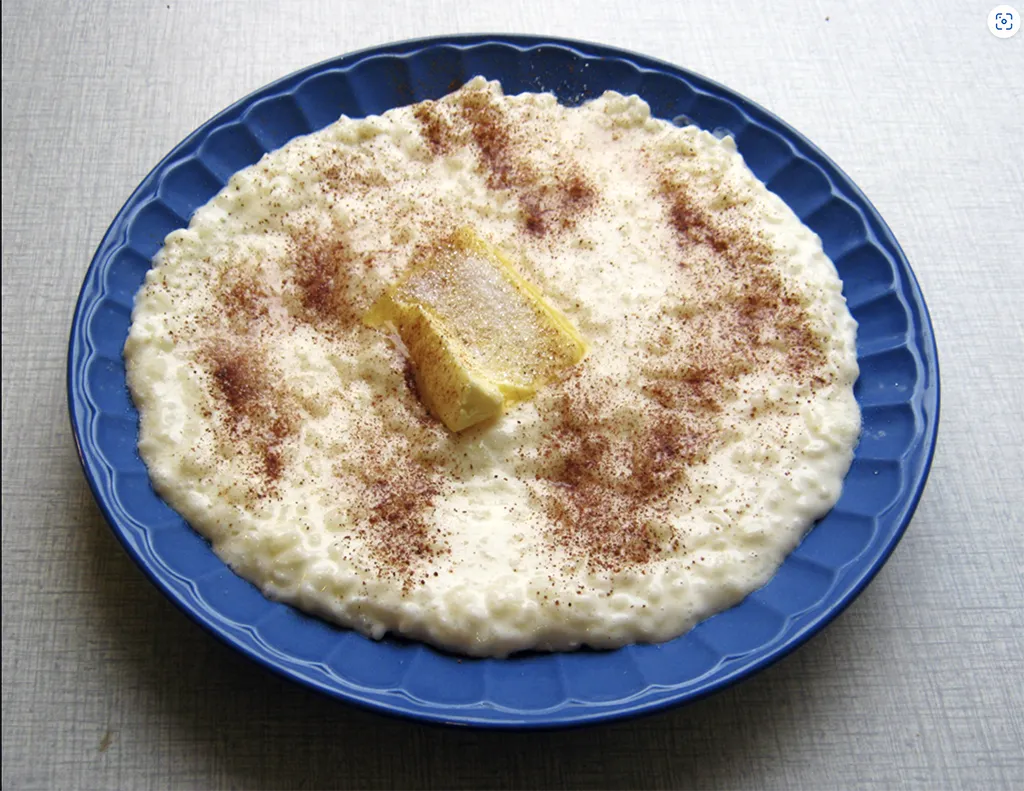
Are Norwegians direct? Nope. They go around the porridge.

Once, I invited a Norwegian acquaintance over for a short visit—she was just coming to pick something up. She looked around and said, “Oh, what a nice home you have, there’s so much… life here.”

I didn’t quite understand what she meant. What life is she talking about? Then I remembered that Norwegians aren’t direct, and I laughed.

It got me thinking. Norwegians love to say that they are direct. I disagree, they are very indirect in fact. As the Norwegian expression says “they go around the porridge” (beat around the bush in English).

There are many Norwegian expressions that show just how indirect Norwegians really are. You always need to read between the lines of what they really mean. For example, if someone says, “Jeg må nesten dra” (I almost have to go). What does that even mean? Do you have to go, or not? Are you going to step halfway out the door and then come back in?

The most indirect Norwegian expression, in my opinion, is “Vi sees plutselig” (we’ll meet suddenly). This is something mysterious. When a Norwegian says that they actually mean: “I’m not going to call you. Please don’t call me either. We’ll probably never see each other again, but if we happen to be in the same room and can’t avoid each other, we’ll say hello.”

There’s a lot to read into those three words. In other languages, there’s nothing quite like it. “We’ll meet suddenly” in English, for example, doesn’t mean anything.

If you use the same expression but drop the word “suddenly,” it means something entirely different. “Vi sees” can be said between good friends who are making an effort to meet again soon. It’s much warmer than saying “Vi sees plutselig.”

Norwegians beat around the bush in all social situations, whether with acquaintances, daycare/barnehage staff, or at work. But Norwegian work culture is probably the best example of how indirect Norwegians are.

When a Norwegian boss asks if you “can look at something,” (se på noe)  it’s not very clear what they actually mean. For example, “Can you look at the invoice?” or “can you look at the report?” If Norwegians are so direct, it would mean that employees could just go over to the boss, glance at the report for a minute, and say, “I’ve looked at the report!” But what the boss might mean is that you should read it, write a summary, or give an update on it later in a meeting.

“Can you check that everything on the invoice is correct, and post it?” would be the sentence of a direct person. But for a Norwegian, “can you look at it?” is enough. Norwegian leaders don’t want to be bossy, so they give vague instructions, so employees don’t feel like they have authoritarian leaders.

When people don’t do a good job, it’s unthinkable in a Norwegian workplace to communicate it in a direct way. “You’re bad at your job” is something no one can say, neither to employees, colleagues, nor bosses. That would be too direct, even though you might think that adults could handle the truth.

In France, we hear such things as children. “The quality of your work wasn’t good enough, I expect better” is something I could read on my math exams when I was 10 years old. If something unpleasant or negative is communicated to you as an adult in Norway, you can be sure it will be wrapped up. There will be meetings, maybe letters, and more meetings. Everyone reads between the lines to understand what’s actually going on.

When Norwegians have to give negative feedback, they have special words they use. For example, the word “uheldig”, or “unfortunate” in English. In English that is not a very strong word but for Norwegians it is.

For adults, it’s an effective word to express dissatisfaction without being too explicit. “It was an unfortunate process” “Det var en uheldig prosess” is a strong message for Norwegians, I’ve learned. But it actually says little about the process itself or what went wrong. If it’s said without further details, it’s up to everyone to understand what went wrong. It’s hard to learn from our mistakes in a society where everyone is so afraid of confrontation.

Why are Norwegians so indirect? Most are conflict-shy. If you state your opinion outright, you risk that the person you’re talking to disagrees with you. Oh no, we can’t have that. It’s much better to be vague and hope that others understand what we mean.

I also find that Norwegians can be indirect in their positive feedback as well. I had a boss a few years ago who didn’t say anything more positive than “That was fine.” “Det var greit”. You got a “That was fine” if you did something extraordinary. Because you’re not supposed to think you’re that great, either. No one wants you to think you’re better than others.

There are some Norwegians in this country who are direct. I was in Tromsø, and there was a headline in the local newspaper that I rarely see in a national newspaper: “Does the mayor think people are stupid?” (iTromsø). If my acquaintance had been from the North, she probably would have said: “Wow, it’s really messy here,” and I would have loved it. Cheers to Northerners for being the most direct of Norwegians.

This article was first published in VG under the title “Typisk norsk å gå rundt grøten” on the 28th of october 2024.


Loading the Elevenlabs Text to Speech AudioNative Player…

Portrait of Lorelou Desjardins smiling, wearing a patterned sweater, with a blurred natural background.

Lorelou Desjardins is a French-born writer, journalist and speaker. She is the author of several best-selling books about Norway, and is a columnist in Norway’s largest newspaper VG. She writes on topics ranging from culture to language and environmental issues. She has been observing Norwegians and writing with humor about them in her internationally famous blog A Frog in the Fjord. Lorelou also gives lectures across the country, helping foreigners better understand Norwegian working culture and make meaningful local connections.

Comments

14 responses to “Are Norwegians direct? Nope. They go around the porridge.”

  1. DANIEL BRIGHT Avatar
    DANIEL BRIGHT

    Brilliant stuff! And by the way, in Deichmans Library in Oslo I heard someone, a british guy and two other women discussing your book in the library there just today!

  2. Norwegians being direct is just one more of the self imposed myths in this country (the others being “we are the best in everything” and “we work a lot and do it efficiently”). A Norwegian would be direct, sometimes borderline rude, when they do not respect you or they do not care what you would think. Our first experience was with the person coordinating the shipment of our luggage – we thought he was extremely rude but we also never met him or came across him later on. In work situations nobody comes to tell you that they disagree with you or are unhappy about something. Instead, they go behind your back complaining to management, HR, unions, whoever.
    The other angle, I believe, is that literal translation from Norwegian to English sounds overly direct in English. Initially I was shocked to read through the emails I was getting in English from Norwegian colleagues. Later I discovered they just do a literal translation, and are not aware of the English connotation.
    Like in every culture, there is code of conduct. There are things one can say and things one cannot say.

  3. Sunniva Heggertveit-Aoudia Avatar
    Sunniva Heggertveit-Aoudia

    I have been reading your blogs from the beginning and always find them interesting and fun. This one, though, I believe there are some nuances missing. “Vi sees plutselig” is a joke. It came from an immigrant writing a poster outside his shop, and it was taken on by Norwegians as something charming – meaning we will see each other soon, but we don’t know exactly when.

    Regarding direct/indirect communication, if you have a look at cultural comparisons (e.g. Hofstede), the Norwegian culture is considered direct – or explicit – compared to others. But, in every culture one is more or less dependent on knowing the context and history. As a Norwegian living in France, I am considered very direct – because I might not always feel and know the nuances either.

    Keep writing and sharing your perspectives!

  4. I totally agree with you. Norwegian teacher here who has worked in different schools around Norway and the first thing I learned was not to refer to a student using “dårlig eller flink elev” but instead “svak eller sterk”! Then I understood that there are some “prohibited ” words we couldn’t use!
    In addition, I could never understand why we had all these meetings every week as we never came to a solution but just “gikk rundt grøten”!!

  5. Wow! I totally agree!
    Confrontation is ok and clears things up quickly
    😄
    I am not conflict shy and appreciate truth.
    Not beating around any bushes or stirring any porridge 😅
    Thank you for your honest perspective
    I appreciate your writing and resonate much with your writing ✍️ it has been an interesting journey being in Norway.
    I find northeners much clearer to understand and not offend haha
    But I sure have met a lot of wonderful human beings in my 10 years here ❤️🇳🇴

  6. Beth Kollé Avatar
    Beth Kollé

    Like the time I was waiting tables for a conference at a hotel in Lillehammer, and a visiting Norwegian General reached up my skirt while I was putting a tray of beer on the table. I dropped the tray and swore at him, I think, quite creatively in English. He may not have understood the words, but he got the point. And he spent the rest of the conference cringing whenever we passed in the corridors, saying, ‘Om forlatelse, frøken, om jeg har gjort noe ‘ufin’.

  7. John Helle Avatar
    John Helle

    The more I read your posts, the more I think you don’t like Norwegians and don’t really understand the cultural nuances of Norwegians. I am American, but of Norwegian descent, and I perfectly understand the reasoning and functioning of these things you find so egregious or sinister. I don’t find them awful, at all. Heidi Sitara Fjeldvig explains things perfectly above.

    1. Egregious and sinister are harsh ways of characterizing a person’s viewpoint. I find these blog-posts spot-on and often hilarious. We live in the states but are frequently in Norway every year. It has occurred to me that Norwegians can be a bit thin-skinned about their culture.

  8. Your blog post made me think about what directness means. In many cultures they are much more indirect, but they probably experience themselves as being pretty darn direct, just like Norwegians. It’s all in the context; if you don’t have the context nothing is clear. In the cultural context of Norway, it’s quite clear and direct what all these things mean, but to a foreigner it isn’t. And if I went to Japan the roles would be reversed. It’s an interesting question, but I’m not a huge fan of using direct translations without filling in any context as a way of purposefully (or maybe not) making something sound really confusing, which in my opinion a lot of people who blog about their expat experiences do. When I read all you examples I thought, wel they’re being quite direct. But that’s a difference in experience and opinion and neither of us is wrong:)

  9. Egil Opsahl Avatar
    Egil Opsahl

    I agree with Heidi regarding “Sees plutselig”. The expression is fairly new, I first heard it a few years ago – so maybe there are local variations in its meaning?

    Your observations on Norwegian “understatements” are interesting. I had not thought about that – but think you are correct. My guess is that we have inherited something from the Brits – who are famous for their understatements (and probably does even more of it than we do).

    I lived and worked in France (Toulouse) for a long period some years ago, so I have at least some connaissance of the differences you are facing!

    Have you written something already regarding humor? In general, humor is a cultural minefield, and an area where (in my opinion) British and French culture really clashes. It would be very interesting to hear your observations on French vs Norwegian humor: What can we and can we not make jokes about? Self-irony; how close do you have to be? And so on… I’m confident you understand what I mean.

    All the best – and keep writing!

  10. Uttrykket “vi sees plutselig” er ikke slik du beskriver, det betyr ikke “ikke ring meg…” eller at man vil unngå noen. Det er en misforståelse.

    Tvertimot, det betyr at vi kan komme til å treffes også når vi ikke har avtalt noe, og at det er hyggelig. Det betyr rett og slett de vi sier, at vi kan komme til å sees raskere enn hva vi tror.

    1. Elspeth Nesse Harris Avatar
      Elspeth Nesse Harris

      Takk – jeg reagerte nemlig på akkurat samme måte. Det var feil beskrivelse av uttrykket.

    2. Men det er nytt, tror jeg, fra Øyeblikkelig borte, plutselig tilbake som skal ha stått på et butikkskilt. Men kanskje var det et uttrykk før og? For meg ligger det i utrykket at vi sees, men hvem vet når. Typisk folk man treffer plutselig et sted

      1. Jeg tenkte også på det skiltet, jeg tror uttrykket startet der, så det er ikke så gammelt.

Leave a Reply

Your email address will not be published. Required fields are marked *

This site uses Akismet to reduce spam. Learn how your comment data is processed.

Discover more from

Subscribe now to keep reading and get free access.

Continue reading