The Joys and Miseries of Raising Children in Norway

Image credits: Shutterstock license

When I had my baby in Norway, I thought “this country is the best to be a mother, and the best to raise kids”. At least that is what every single Norwegian person I met told me. (To read this article in French, see Elever des enfants en Norvège: à quoi s’attendre)

But “best” is a subjective concept, is “best” the same for a French parent, an Indian one, and a Brazilian one? As a foreigner, raising a child in another culture and another system is a challenge in itself, mainly because this is not our native language, some of us don’t speak Norwegian, and this is not the upbringing we went through ourselves. Everything is new, both for our kid and for ourselves, yet we all have to adapt at the same time. And let’s face it, some elements are easier to adapt than others.

The joys and miseries of raising kids in Norway really depends on what your parenting style is, and what your objectives are in terms of living in Norway “forever” or moving afterwards and reintegrating your kids in another school system. For example for some parents having kids in a system where there are no grades until they turn 13 years old is fantastic, taking that pressure off their children, while for other parents it is absurd and damaging to their kid’s chances at a higher education.

This article is based on my own experience and observations, but you might have another one, so please share and comment!

  • Conformism and One-size-fits-all

Norwegians are incredibly conformist in most aspects of life and society, and child upbringing is no exception.

What does one size fit all mean when raising children? Obviously we are all different and all different parents, but some rules are expected to be respected when in Norway. This mold is shown to you informally already at birth when you are sent with your kid to the local health station. They will check all sorts of things that are important for the Norwegian system, and encourage the parents in that direction. For example in Norway there is an expectation to breastfeed for one year, and other expectations in terms of starting solid food at 4 months with porridge, and other messages you hear, without being forced to comply, you are already as a parent and as a child taken in the “right” direction.

Kindergartens, in which most children go from the age of 1 year old, is the start of the real mold, where kids are expected to start the day roughly at the same time every morning, eat at the same time (11am), eat the same food as other kids, nap at the same time, eat again, play outside, learn Norwegian, and get picked up by their parents. It is then expected they will eat again, be bathed and put to bed around 7pm.

If your kid naps twice a day, eats other food, goes to bed much later, or comes in much later, it might be a problem. You will gently be asked as a parent to conform. Sånn er det i Norge. They also have lists of clothes they want you to buy, even though you might not think it is necessary you are “obliged” to accept their rules.

This is the start of the conformist adventure of child-raising in Norway. It goes on for years and for every activity. There is one way of celebrating a Norwegian birthday for kids, one way to deal with child sickness etc.

  • A focus on children’s wellbeing

On the bright side, there is a big focus on children’s well-being in Norwegian society. Children are seen and valued and their feelings and needs are too. Sure, some might see this as a down side, since it also means children can rule a whole family depending on how you set boundaries (and if you do, you need to set them in a gentle way).

It is illegal for anyone to abuse children in Norway, whether it is physically, emotionally or sexually, and such crimes are severely punished. This is from a law from 1987.

Kindergartens are highly subsidised by the state and it is free for children to get any kind of health care.

The idea is that whether your parents are rich or poor you should have access to the same day care system and health service.

  • No pressure for kids

Until 6 years old children are in kindergarten, where they are given time to adapt to living in community, having rules and common rhythm. They are taught to play together, resolve conflicts, sing Norwegian songs, and delve at their own rhythm. They beauty of it for me, who went through a strict French system, is that there is no pressure on children. They don’t have to be nappy-free at 3 years old like in the French system, they can have naps as long as they need to, and they are encouraged to be themselves.

  • Focus on being outside and independent

Children are highly encouraged to be outside to play, and figure things out on their own, including climbing trees and getting dirty. Again, depending on your parenting style, getting your kids back with sand all over their body and clothes every day in the spring might be something you think is great or awful. In many kindergartens kids also go outside such as in the forest or out in the wilderness once a week. They have to carry their back pack with their food, clothes and water, and will walk without help, and follow the group, sometimes for several hours. This for Norwegians is the best childhood you can offer your kids, because they are living the “friluftsliv” dream. Being in nature, working your body, no screens, no disturbance from the modern world.

Again, some parents might be a bit scared to see their 3 year old carry a backpack and walk in the snow for an hour without any help. But Norwegian parents will just promise them a warm chocolate when it is time for a pause.

  • When Norwegian kids are sick

When kids are sick, we have the chance to have sick day kids which are paid for my your employer, without having to work those days. Also, there is usually a good acceptance by employers that this happens and it is nobody’s fault.

Many foreign parents have complained that their children do not get the health care they need. For example because their kid needs antibiotics and the doctor refuses to prescribe them. Norway has a very strict policy on antibiotics: doctors will not prescribe antibiotics unless absolutely necessary (i.e. if there is a bacterial infection). The reason is that antibiotic resistance is highly researched here, and the Norwegian system wants to avoid that as much as possible. If you as a parent might think your kids needs antibiotics, but the doctor refuses, it can be because the doctor has tested your kid and knows it is not a bacterial infection, or the doctor has not tested and wants to see if it gets worse “det ordner seg” kind of attitude (“det ordner seg” means “it will solve itself eventually”). The first reason not to prescribe them is good, but the second follows a laziest attitude of some doctors, and many parents raised in countries where there was a much bigger access to antibiotics can get frustrated.

Another complaint by foreign parents is when kids have fever. In Norway fever in itself is not seen as something that needs treatment. It is the child’s body fighting back, and unless it hits high temperatures for a long time, it is not considered an emergency or even something to treat. The problem here, is that again, some doctors and ER rooms under estimate the seriousness of the situation, and I have heard a scary story of a child who almost died because ER nurses kept saying “det ordner seg”. It is an art to get them to take you seriously, don’t get angry but go in harassment mode to see a doctor. There is a fine line here between hysterical and concerned enough to see a doctor.

  • Social pressure and tall poppy syndrom

Have you heard of the tall poppy syndrom? In a field of poppies, the tall poppy get its head cut off. They all need to be at the same level. It is the same for children in Norway. Children need to be treated the same, and not be seen as too smart, or too rich, or too anything at all. I have been giving warm food to my child since he eats solid food, and this is a difference that has hardly been tolerated by institutions such as health stations and kindergartens. The reason? Don’t stand out, the system is the same for everyone, and that mold I had writing about earlier in this article needs to get everyone on the same page. Same thing if you want to teach your kid to write earlier, or if you want to push them at school to be good or God forbid, the best. You will get “uglesett” (a Norwegian expression, looked sideways or looked at as by an owl) by teachers and other parents.

This is a fascinating topic, because there are social classes in this country and obviously some people become surgeons and others clean floors, so how are we all equal? I believe differentiation between children exists, and is subtly infused by parents of higher social classes but by still keeping the appearances of “we are all the same” expected by the Norwegian society.

  • The terrible food given to children

Now my favourite topic: food given to kids in this country. This is a recurrent topic for groups of foreign parents on social media, and it has also become a topic for Norwegian parents in national newspapers. The topic is the following: why do kids in this country eat so much processed food, usually from tubes, why do they eat so much bread, why is there so little focus on giving them homemade warm food every day, with vegetables and “normal” food. Why do they eat so much sugar and so on.

Kindergartens provide between 5 and 15 meals to children every week depending on the meal plan your kindergarten has, the commune you live in etc. Some kindergartens (a minority), have a chef, making warm food to kids every day. Some get 2-3 warm meals delivered per week, and others only get one warm meal per week delivered. This means that other meals are made of “brødmat” which is slices of bread, with “pålegg” (salami, cheese etc.). Some vegetables and fruits are available, but still, some may say it is not enough and a higher focus should be given to proper meals. A high proportion of Norwegian children, as early as 1,5 years old, are put on medication due to constipation, and there have been concerns regarding the amount of salt and sugar in the food given in kindergartens.

This is a taboo topic in Norway, because of some other topics I cover here: the tall poppy syndrom. Who do you think you are to want other/better food? Bread and “pålegg” has been sold as being truly Norwegian, convenient and very healthy, so it is a difficult change to make. Read more on this topic: Kids in Norway deserve better food

  • A society made for people with kids

I have no intention on raising my kids anywhere else than Norway, despite some of the “miseries” I have covered in this article. Why is that? The first reason is that this society is made for people with kids. Employees can leave at a normal hour to pick up their kids, we have subsidised kindergartens with high quality care, and children are happy. I don’t live in Oslo, and seeing Norwegian kids playing outside and roaming freely from one house to another, from one garden to the street where they are “kings” is a joy to watch.

One topic I did not cover here is the screens. I am not sure I have enough experience with this, but it seems like the heavy screen time for Norwegian kids at least imposed by the school system starts when they are 6 years old at primary school. There too, a national debate is ongoing and many political parties want to restrict the screen time and get books back into schools like Sweden has done.

Anything else I missed? Comment below!

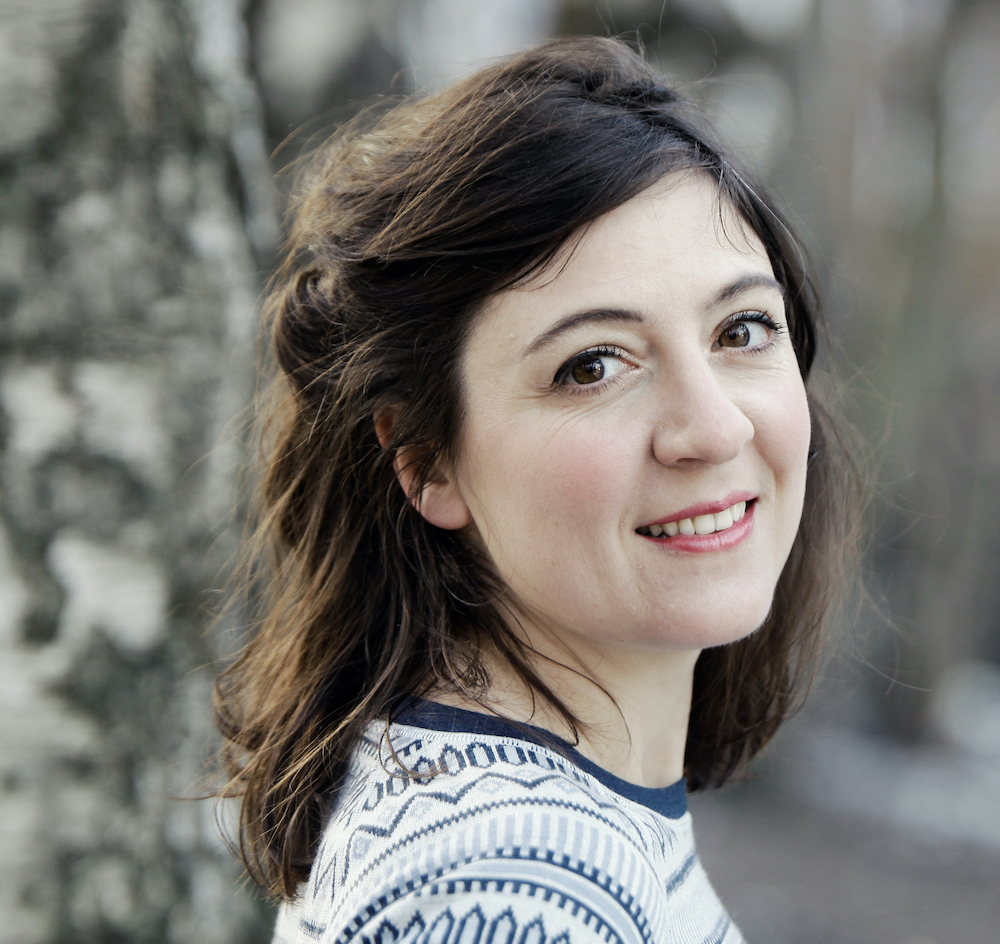
Portrait of Lorelou Desjardins smiling, wearing a patterned sweater, with a blurred natural background.

Lorelou Desjardins is a French-born writer, journalist and speaker. She is the author of several best-selling books about Norway, and is a columnist in Norway’s largest newspaper VG. She writes on topics ranging from culture to language and environmental issues. She has been observing Norwegians and writing with humor about them in her internationally famous blog A Frog in the Fjord. Lorelou also gives lectures across the country, helping foreigners better understand Norwegian working culture and make meaningful local connections.

Comments

24 responses to “The Joys and Miseries of Raising Children in Norway”

  1. Sarah Nelson Avatar
    Sarah Nelson

    Interesting to read. It gave me insight on my inlaws who are 2nd generation norwegian immigrants. They expect complete conformity, in foods, dress, and even opinions on different topics. I’m thinking this where it comes from. Thank you! (

  2. Eastern European parents living in Norway for many years with 3 kids…
    The older kids get the more i hate this place and planning to leave it all behind. This place is good for economics, best for single ppl without a care in the world.

  3. Ruth Noronha Avatar
    Ruth Noronha

    Sounds like pure hell. To me this is a bs society and that there are many govt funded programs that are out dated but because of the large funding the govt spends they don’t want to change. They push this stupid ideology on young people. Hateful country. I would never visit this disgusting country, I would never help anyone from this disgusting country and I would never interact, mingle or allow my kid to be friends with people from this country.

  4. It seems they are raising kids like robot or zombie

  5. Good observations about Norwegian childrearing idiosyncracies.

    Just want to add to the advice for “newer” immigrants to push the doctors a bit. This is very important to learn about the Norwegian healthcare systems and something not even all natives are good at:

    If you do not “plough ahead” and push the general practitioner to do what you want, for instance getting specialist appointments if you feel that there is a need for that, NOTHING will happen! The system is tragically protective about referrals and actually looking into things.

    Some general practitioners are good at this, but they are mostly “dormant” when it comes to non-lethal ailments (there is an air of alertness regarding cancer and some other symptoms).

  6. Dear Pavel,

    Yes exactly,I should have written Barnevern. Thank you very much for the response. It will definitely help to calm the nerves of my wife and I have shared it with her with some nice follow on discussion. I already started to get a feel of the language through Duolingo app,but for me a physical language class enrollment is required as I am not to confident on learning it online. I read few cultural articles about Haugesund where I would be moving. Let me know any other specific sources to learn more about Haugesund and Norway.
    Also you said you did some courses through/ with Barnevern, could you tell me a bit more details on this,I mean if they conduct some parenting sessions or similar sessions for the general public then it could be helpful too.

    Again many thanks for reading and also sharing your insights.

    Kind regards

    1. Dude,
      Stay away from Barnevern. You don’t want to go in their sight.
      There have not been many scandals the last few years. Might be because the European Court of Human Rights found Norway guilty of violating human rights because of Barnevern actions. Also, there was a scandal where it was found out that one of the Barnevern top experts was a pedophile. Finally, likely there is a generational shift like everywhere else, people seem to become more open to other cultures.
      Barnevern, as any bureaucracy, looks for reasons to justify its existence and budgets. Better live your life and enjoy what this country has to offer rather than getting in interaction with authorities.

  7. I am about to take a decision about moving to Norway. We are from Asia(India). We have unfortunately stumbled upon some unfortunate incidents on the Child protection System (CPS) over the past few years and saw few documentaries in the internet . This has come to our knowledge at a time when we were mentally all prepared and hence has caused some anxiety and a sense of fear. We do not want to reconsider our decision at this stage but at the same time it’s causing some stress which is not at all a good sign before changing continents.
    Could you kindly provide some insights to this which may be meaningful to us? What I have been telling myself is that – we had a child waiting for almost 10 years after marriage,we have never ever thought of corporal treatment,beating etc. We as a couple never have violent sessions of rage.However we do have heated arguments occasionally and very seldom in front of the child,so probably it is not an issue to think about CPS officers taking away the child. But there is this lingering thought of getting to know more about it and it means it’s not going off our minds.
    Would love to hear your perception,views and practical knowledge about this issue.

    Thank you very much for reading.

    Kind regards,

    1. Hahaha! By “CPS” you mean barnevern? You should not worry about that, it is all mostly empty stories. Do not insult your child or beat him (her), and everything will be all right. If your child is happy and does well at school – you will definitely will not attract their attention :-)))) The main goal of barnevern is to keep child in the family, and not to take him/her from you.
      As a family we had contacts with them, even did courses. And I can tell you they are nice people trying to do their job. And all that fantastic stories come from the fact that they are not allowed to tell their side of the story. That is why in very few cases when barnevern has to act, usually very justified, the parents just invent all kind of lies to try to win the case. And of course, that does attract a lot attention in the newspapers, but does not stand in court.
      So, again, barnevern is a very least of your worries. If I were you, I would concentrate on their culture and learning Norwegian. That will help you integrate.

  8. Great blogg, my wife sent your article to me.

    We are foreigners (Spanish and Russian), live in Norway for 12 years and have three children, all born here. I totally agree with almost everything what you are saying, food especially. What a nightmare to prepare two mattpakes for each of two school children (for school and SFO) every day, as school just do not serve any food there! And all of that “voluntary-obligatory” parents activities, I even do not start there :-)))))
    However, I believe that Norway is no different from other countries in this sense: everythere there is certain set of rules that people are supposed to follow. In Spain and Russia it would be totally different and foreigners would find those rules ridiculous/stupid/magnificent/etc. But the people there just used to live that way. The same with Norwegians: they do not find strange their rules just because they were born with them. And us after 12 years here, very often we critisize the rules in other countries, when we are there :-))))
    And common! There is also really nice staff here, which people often forget: for example, you do need to lock your bike (probably not in Oslo though), cheap electricity, relaxed way of work, great nature, etc, etc

  9. Does anyone know whether it is the same approach in Sweden and Denmark? Just curious if it is a Scandinavian or Norwegian thing.

    1. As a half swede who worked and lived in also Denmark, next to norway, i can verify it’s Scandinavian.

  10. Per Chr. Brynildsen Avatar
    Per Chr. Brynildsen

    Interesting comments, always good to get a view from outside, but please, please do not give your child ( or your self for that matter) antibiotics against doctor’s advice. It does more harm than good in the long run!

  11. I’m Norweian and in the middle of spending a year with my kids in Spain. It is so intersting to be the foreigner, and to get to challenge my self when it comes to the “right” way to treat kids.

    First of all, much of the social pressure you describe on everyone being equal, everyone feeding the kids the same things etc. I think it might be easier as a Norwegian to ignore that because I already “belong” to Norway, so when doing weird things I am labeled more as a “weird norwegian” than as a “foreigner”, and that is probably a lot easier. So, If there is one message I would love to send to all foreign parents is that while the society on one hand is incredibly “similar” it is still as you point out also full of social layers and differences. And, if there is one thing we need more of it is parents that bring a healthier and more vegetable and taste-rich food culture to our kids. So please please please every foreign parent out there: trust your own food culture, feed your kids what you are comfortable with, and pick and choose the best part from all the cultures you belong to make the best reality for you, your family and your kids.
    In the end that is how Norway and the world gets better I believe.

    Here in Spain there is no concept of “everyone or noone” when it comes to birthdayparties, and that was a bit suprising to me. I think everyone has been through the “how do we celebrate birthday in this group”-conversation in Norway. But here it is truly everyone at their own, it is not even topic to discuss. Which makes total sense as well, first of all it is your family your desicion. Then, the birthdays tend to be a mix of friends and family, including friends of siblings and so on, so a more diverse crowd than all the girls or all the boys or everyone in one class.
    I have one kid that easily becomes popular, and gets invited to birthdays quite quick, and I have one that can struggle more and that has been told “you will not be invited to my birthday” as a social control game in the child care. It is painful when it is used wrong, but a great way to build connections between groups of kids that might be at different ages but enjoy time together. And the younger happily tags along as a “+1” with the older when that is possible.

    Thanks for pointing out both pros and cons of norwegian society. I am trying my best to build on the positives, and mitigate the negatives of norwegian society to those that i meet.

  12. Bev Braaten Avatar
    Bev Braaten

    This is just a comment on your post. I, an American, raised two girls in Norway. Much of what you say is very true. Most of it, in fact. But there are a couple of places that don’t fit together. You talk about how important conformity is -very much in barnehages for example. True! But in the next paragraph you talk about how there is no pressure: kids can nap as long as they want etc. Both things can not be true at the same time.
    I found the need to conform extreme. I had two especially bright children in the public school system who could have excelled way more than they were allowed to. But the school system teaches to the average child so that no one feels different. My children went on to study outside Norway and are very accomplished adults now.

    1. Can I ask, did you relocate out of Norway to give them this more tailored education? Or did they attend boarding schools? And which country fit the bill? I am very concerned (as an American who values independent thought and the ability to think for one’s self) about my child making themselves small to “fit in.” More Norwegian partner of course has no such concerns, ha.

    2. Well, as a foreigner, Norwegians themselves do very well and are well educated which obviously speaks to their education system

      1. I’d say that the school system does indeed cater to the average student, so that those who do reach the highest levels of education and careers do so despite of and not because of the system. However, I’m a result of this myself, not really “applying myself” before I was 25 years old, and coming from a rural area with uneducated working-class parents. In other words, I am unlikely to have gotten a chance at all in a system that only cared about honing the very best kids.

  13. I just want to point out that there is a lot of confusion with the use of the word “kindergarten” as a translation for barnehage. As I understand it, kindergarten is a german word, but the way the word kindergarten is used in the US doesn’t make for a very good translation for barnehage. In the US you have nursery, daycare, and preschool that are similar to barnehage. Kindergarten is like 1. klasse. You learn how to read in kindergarten. So a child beginning kindergarten in the US at age 5, is like a child beginning in 1. klasse in Norway at age 6. And everybody goes. Some say that it isn’t required by law. Maybe it isn’t, but I have never met anyone younger than 50 that didn’t go to kindergarten. (Unless they homeschooled, but then they still ‘did’ kindergarten.) (Also annoys me that American high school isn’t recognized here. Most people will say that it is because Americans only do 12 years of school. It isn’t skills based at all. There’s the problem of American bachelor being 4 years compared to 3 years in Norway, but I still say it should be skills based.)

  14. Oh and the screen issue is an important one to come back to! Kindergartens with 1 year olds are mandated to include tablet use daily in some way in Norway. This is pretty outrageous in my mind.

    1. really? where is that written I was not aware of this rule

  15. “they can have naps as long as they need to, and they are encouraged to be themselves.”
    I think I understand where you are coming from here, from the no pressure on kids and allowing them to be kids angle, but I would disagree that they are encouraged to be themselves. This is true as long as they conform to a socially acceptable box placed for them. They are encouraged to be like everyone else and conform, which you did state earlier. Norway truly is the happiest place if you fit into that rigid box and conform to that one way to do everything! If not, it can be miserable, as you say.

  16. Arne Julien Avatar
    Arne Julien

    Overall, I agree. I am a Norwegian native and father to 3 kids (the youngest is 16 now). There are some things I would have phrased differently, – but then I am a native 🙂

    Regarding “In many kindergartens kids also go outside such as in the forest or out in the wilderness once a week.”: Or, if you include excursions in the local or semi-local area, even more often. Which is why it is recommended/ required that children come to the kindergarten not very late in the morning, like no later than 9. The other kids and staff simply may not be there if you come later!

    Always interesting to read your blog!

  17. Great overview mirroring my own experience, in particular the one-size-fits-all mentality.
    I’m assuming « no characters » means « no grades »?

Leave a Reply

Your email address will not be published. Required fields are marked *

This site uses Akismet to reduce spam. Learn how your comment data is processed.

Discover more from

Subscribe now to keep reading and get free access.

Continue reading

A Frog in the Fjord
Privacy Overview

This website uses cookies so that we can provide you with the best user experience possible. Cookie information is stored in your browser and performs functions such as recognising you when you return to our website and helping our team to understand which sections of the website you find most interesting and useful.