Yes I am surfing on some kind of language wave here (see my previous post: Confusing things Norwegians say). I promise the next blogpost will be about something else.
Here is a list of words that have always confused me, and for a reason. A long vowel instead of a short one, a mistake in how you shape your “u”, making it into a “y”, forgetting to glue two words together…all these things can make the Norwegian native speaker listening to you completely confused. That is because you said something completely different than what you intended. But he is so polite he pretended he understood. The beauty of forgiveness, Norwegians never correct your mistakes in Norwegian! There might be mistakes here, please do forgive (and correct) me.
lys og lus
Here is the tough difference between Y and U. Most times Norwegians will hear that you made a mistake and get over it, but be careful, some words have a completely different meaning.
Example: Luset er så vakkert i Hellas! You probably meant to say that the light is so beautiful in Greece, but instead you said that the lice (yes, those little animals that make you scratch your head) were beautiful in Greece.
rutete og rotete
Depending on how you pronounce the U (not to confuse with the sound O), you will say completely different things. Jeg liker din rotete skjerf. You just told the guy you liked his messy scarf, when you probably meant you liked his checkered scarf (you know like the kilts for Scottish men). Rotete = messy, rutete = checkered
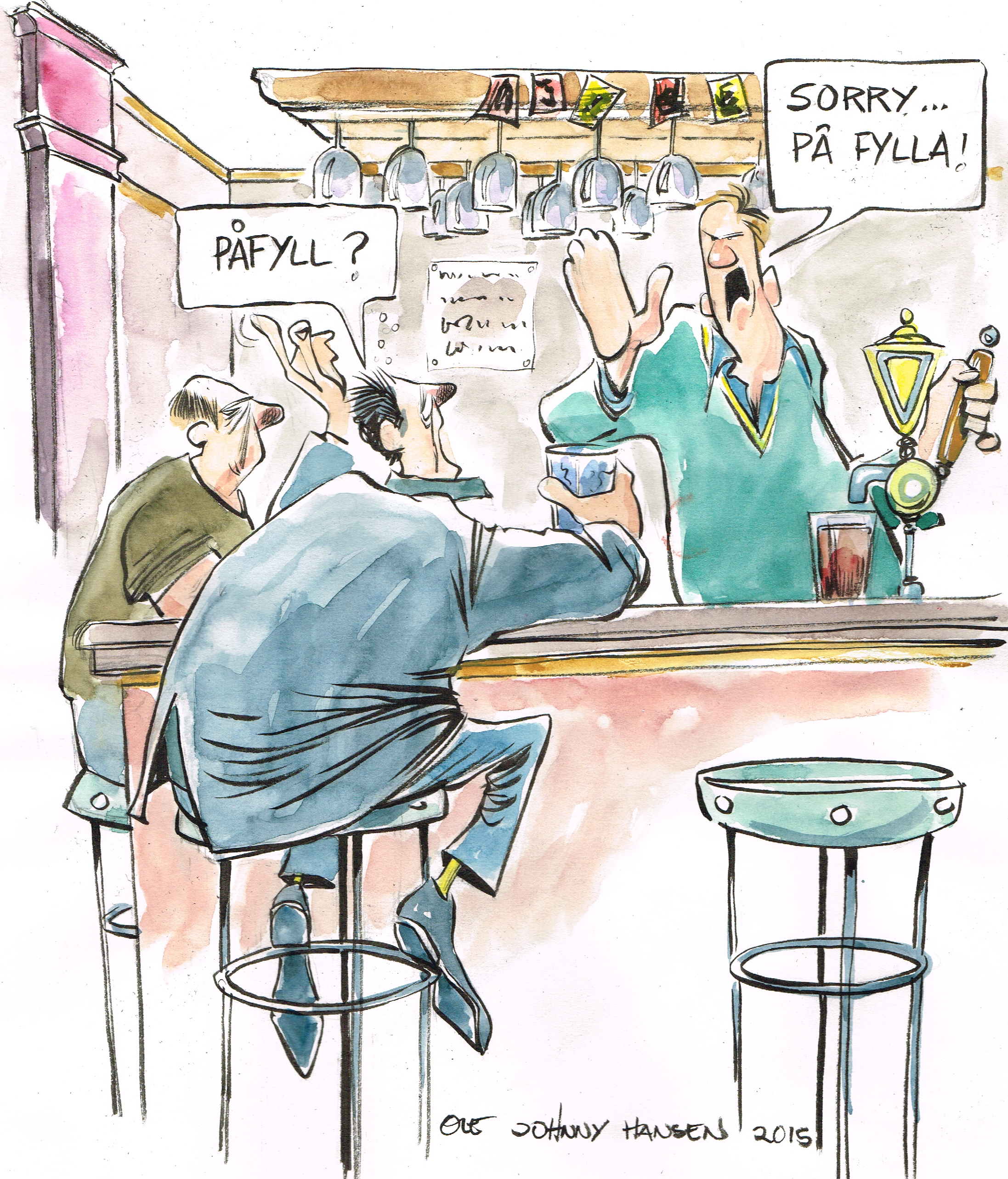
påfyll og på fylla
påfyll = a refill. You will see this above coffee machines or Sprite and Coke in IKEA. However på fylla means to be drunk.
På fylla? says the smiling waitress with a jar of coffee. She just asked whether you wanted to get drunk. What she probably meant was to ask if you wanted a påfyll, i.e. a refill of coffee.
et ting og en ting
I believed for a long time that Stortinget meant “the big thing”. I thought wow, Norwegians really aren’t that formal to call their Parliement the big thing. It doesn’t. En ting means a thing, et ting what Vikings used for legislative purposes and as a court. It was there criminals were judged and convicted. The word survived through times and now the Norwegian parliament is called Stortinget: the big Ting. (and not the big thing over there blocking the view).
fett og feit
Fett has many meanings: it means “fat” in the sense of “vegetable fat” in noodles for example: vegetabilske fett. But it also (strangely enough) means “cool”. It is also the name of a feminist magazine. And
Feit on the other hand means “fat”, for a person. Their pronunciation is not the same, “Feit” sounds like it has an A instead of an E (Fait), while fett has a short E (because of the double T). Be careful, if you want to tell someone they are cool, make sure you don’t say they are fat!
løpe og loppe
Now in the spring you might want to go and see loppemarked, and not løpemarked. Loppe means flea, therefore fleamarket and å løpe means to run. The difference here is quite massive for Norwegian native speakers, but it is hard for foreigners especially in the beginning, to say it well. Loppe has a short “o” (because of the double consonant) while løpe has a long ø and of course o and ø is not the same sound.
Vanligvis lopper jeg i Vigelandsparken. Nei nei. Du løper, kanskje til loppemarkedet.
gift og giftig
Er det giftig å gifte seg? Is it toxic/poisonous to get married. To me it seemed like these two words had the same root but they don’t (not that I know of at least). A snake is giftig and people get married (gifte seg). Do not say that “slangen jeg så i skogen var gift” after all he could have been married, it’s not like we know the personal life of snakes. Or that jeg giftig meg i fjor.
boller og bøler
This is something I do not master yet. Because I think it is tough. This is the same type of mistake than løpe and loppe as the same sounds are involved.
Bolle is a round bun (to eat), or a bowl (to eat in). Boller is the plural form of bolle, while Bøler is an area of Oslo in Østmarka. It is also the name of a great band (hei there Einar and Olav!) which happens to have musicians living in Bøler (and not in boller as I first thought). Make sure you say a short o and no ø in boller and a long ø in Bøler and you should be fine. Otherwise you’ll be telling people you live in a cinnamon ball.
russ og russere
Now you might wonder, like me, why those teenagers in red and blue trousers running around drunk in May every year are called “Russ”. They have no link to Russians, except for the liters of vodka they consume. Russians are “russere” and russ are well, I don’t know what they are called in English. Those noisy teenagers going around in colourful buses.
forsett og fortsett
Hva er dine nyttårsforsetter? Whaattt? Are you asking me what are my continuations for the new year’s? What kind of sense does that make? Forsett = resolutions (new year’s resolutions) and å fortsette = to continue. Add a little salt with fortsatt = still. Har du fortsatt nyttårsforsetter etter at du fortsatte å drikke? And then you wonder why it takes us years to master your language!
frisyre og fri syre
The rule here is to remember whether you should stick the words together or leave them apart. One means “hairstyle”; the other means “free acid” (yes, thre drug). Choose your business right. Same with ananas ringer (pineapple is ringing – like, on the phone) and ananasringer (pineapple rings, like the ones you eat).
One day, in two million years, we’ll all be fluent in Norwegian. Dream on! And good luck, learning Norwegian gets more and more amusing with time. If you want to read more things I wrote about Norwegian language check out: How to Become Fluent in Norwegian (or Die Trying) and How to Pretend to be Fluent in Norwegian.




Leave a Reply