Your cart is currently empty!

How to Become Fluent in Norwegian (Or Die Trying)
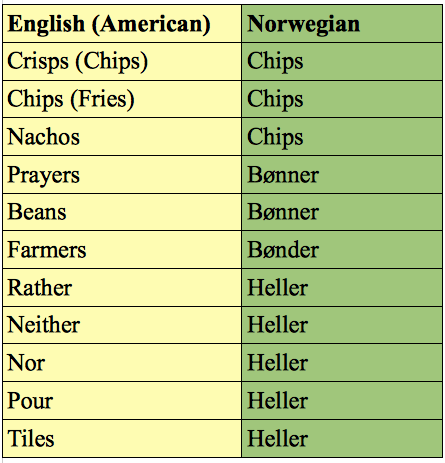
Unless you are some kind of language genius “What can I say, I have a good ear for languages” annoying kind of person, learning anything from Russian to Tahitian in 8 weeks, you’ll need to take Norwegian language classes.
1) Register in a language course, a.k.a norskkurs
There are many schools and institutions in Norway giving such classes. Some are public such as Rosenhoff (this is under the Oslo kommune), some are private such as Alfa Skolen, and others are something in between such as Folkeuniversitetet (subsidised by the State and available all over the country).
If you go for the public classes then be prepared for some testing. Yes, even though you tell them you don’t know a single word of Norwegian they will still test you on your level, as ironic as it sounds. The first test I had was a lady who asked me to copy a text by hand as fast as I could. I didn’t understand the point of this exercise so I started asking all sorts of questions. “Your time starts NOW” she said when pressing a timer. WTF, I started copying the text as fast as I could and when I was done she stopped the timer and said “Well, now I know you can read and write. You just got up one level”. Oh my oh my, so this is how it works.
What happens is that levels are different for immigrants who cannot read or write in their own langauge, those who can, those who have a university education, those who can read and write in several languages. Then on top you have German speakers who can basically read and understand the substance of most Norwegian texts without having attended any classes. So you might not be as “beginner” as you thought.
2) Be prepared to sound like an idiot
I still remember my first Norwegian language course, it was given by a vegan metal head. She was not exactly the best teacher in the world, and every time we asked her a question about a word or a grammar rule she would roll her eyes kind of saying “you guys are so dumb”. Learning a language makes you feel dumb, that’s for sure, so be prepared to feel and look dumb most of the way. When you ask questions to your teacher about something he/she repeated 20 times already, when you try to speak and realise saying my name is.. what is your name, how are you is all you are able to recall from all these hours looking at your books.
When speaking 5 minutes in Norwegian in party and feeling exhausted. When failing to give the right tone to a word, failing therefore to make yourself understood although you repeated the same word 7 times. Or when forgetting to pronounce a long vowel before a single consonnant and saying happily that you joined a pikkekor instead of pikekor. Well well, making mistakes and looking a little idiotic is part of the learning process.
3) Be prepared for challenges on the way
By the time you’re able to ask for someone’s name and tell them yours you learn that there are two official languages in Norway: bokmål and nynorsk. This is linked to Norway’s history, as the Danes came to occupy Norway Bokmål is a norwegianised and more understandable version of the Danish Language (previously called riksmål) while nynorsk (new Norwegian) is a written language which integrates many different pre-Danish dialects. You will also soon realise that Norwegian language has an unbelievable number of dialects. I guess as people used to live very far away from each other, each valley, fjord and village developped its’ own dialect.
Diversity is fantastic when you think of it, but as a foreigner learning Norwegian it doesn’t look fantastic at all. It’s like making it to top of the first hill and realizing there is a chain of very high mountains ahead of you: no matter how well you master the language they are teaching you at school (bokmål) you will for sure find yourself in some place where you don’t understand what people are saying. Like Molde, Stavanger, Malmø (Yeah, Swedish, but we’re expected to understand that as well) or Tromsø. Or you might have to read and understand an article or an email where people write in nynorsk. As they are both Norway’s official languages both can be used, except that only bokmål is taught to foreigners unless you go to much higher classes. And that is kind of a shame, we should be learning equally both official languages if you ask me.
4) Make Norwegian friends
To all the cynical out there, it is possible to make Norwegian friends, especially since you live in the country where most of them are gathered. And very important: you need to speak to them in Norwegian, preferably from the moment you meet them otherwise it will be too easy to switch to English. I know it sounds tough, but I am afraid this is the fastest way to learn Norwegian (it is called practising).
Or find a Norwegian boyfriend/girlfriend with whom you will speak in Norwegian. If you already have one and you have been speaking English or another common Language since the beginning, you will have to force the Norwegian language in your relationship. This will be irritating for him/her for a few weeks and then it will be totally fine. Because suddenly you’ll be able to participate fully in parties, with his/her Norwegian friends and family, so it is definitely worth it for both of you.
6) Get street wise, and go to parties
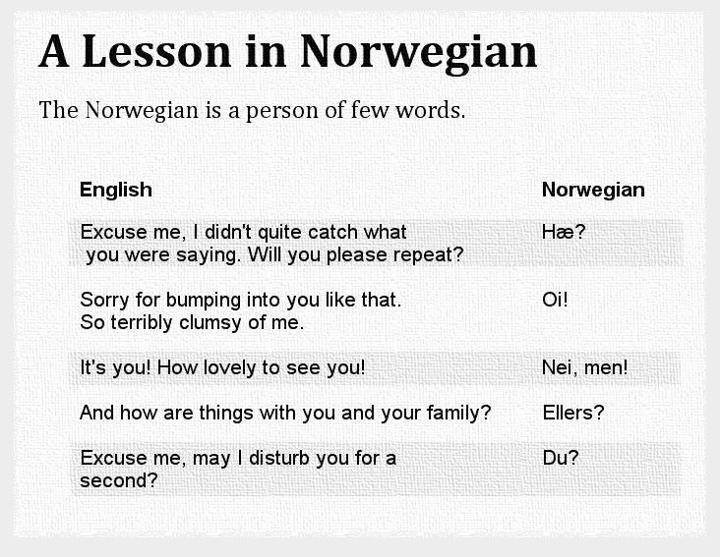
Grammar is one thing, but the most important is to make yourself understood in whatever social situation you are forced into: work, parties, shops. All these require different attitudes and vocabulary so you will not be able to stick to your books only.
Remember there are many things a language course will never teach you: that there is something called Kebabnorsk, spoken by the youth and the immigrants (not sure kebabnorsk is a nice word, probably not). That you can say “as” after about just anything, and that the real deal is not fy søren but fy faen. Learning a language takes a long time and Norwegian is no exception. At some point you’ll start getting these few words that make all the difference if said at the right time “så koselig” “så spennende” and you might seem more fluent than you really are. See How to Pretend to be Fluent in Norwegian.
5) Read in Norwegian (about stuff you like)
When I stopped going to norskkurs I promised myself I would read articles from Norwegian newspapers every single day, learn 5 new words per day and I even started a Norwegian novel by Erlend Loe (an easy and funny read, I recommend it). But of course that discipline lasted 5 days because you know, work, friends, family, travels. We are busy.
So my advice if for you to find something you like, those things that will make Norwegian language become part of your daily life, not a duty like School. In my case it is comic books (Pondus, Christopher Nielsen) and recipe books but it can be anything you like: sports, tv shows, news (www.klartale.no for easy-to-read news in Norwegian) but this will help you get more vocabulary and keep in touch with the language even though you don’t have a lot of people to practice with. For those of you having a good visual memory it will also decrease your grammar and spelling mistakes.
In the imaginary and best version of my life I start reading Ibsen, go to a play and understand everything. Haha well. Another tip if you want to make it: don’t expect too much from yourself, don’t be afraid to make mistakes, and when the time is right, take another class to make sure you don’t end up being here for 10 years still not knowing when to use “hans” and “sin”. (I still don’t).
And remember that it could be worse, you could have to learn Danish, potentially one of the hardest languages in the world to learn for foreigners and even for Danes. And also much more expensive to learn than Norwegian (think of all these potatoes you’ll need to buy to shove down your throat to speak proper Danish).
Norwegian people are usually quite forgiving when it comes to listening to a foreigner speaking with a funny accent. Some will get impatient and switch to English. Well, I never said it was easy, and remember, giving up is not an option. Once a friend told me that there is nothing to be ashamed of by feeling stupid on the way to learning Norwegian. What you should be ashamed of is to have lived in a country for many years without speaking a word of it.
Whoever you are, good luck to you!




Leave a Reply